

How To Use Full Red/far Red Flower Booster Lights
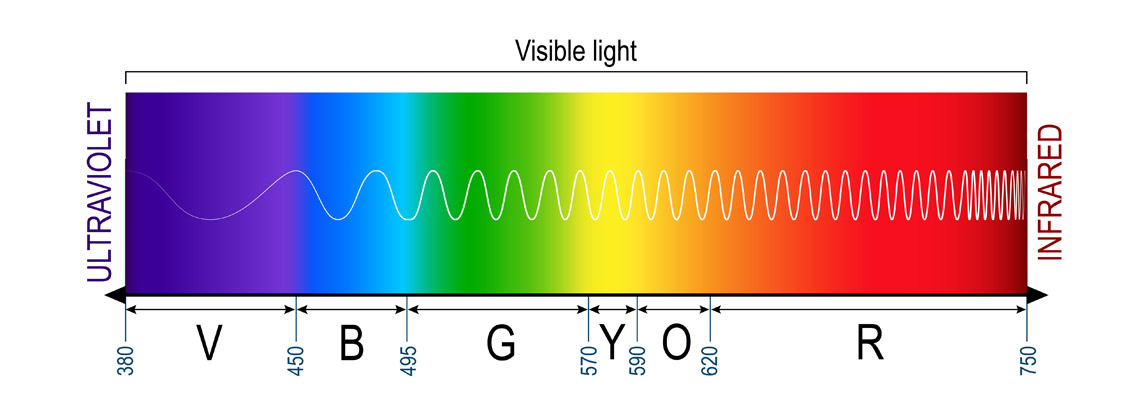
To us, nosotros can barely meet it, where it hangs out on the edge of the visible low-cal spectrum, but to our apprehensive plants, far-scarlet is a game-changer, manipulating both their morphology and ability to photosynthesize. Like UV light, far-red low-cal is called by some the "forgotten" spectrum. Both spectrums take niggling to no purpose for the everyday person due to their poor illumination. In fact, when defining Photosynthetically Active Radiation (PAR) and studying the effects of the different spectrums on plants, far-red went unobserved by Dr. Keith McCree due to his apply of prisms and filters. Thankfully, today we have avant-garde applied science that proves both far-ruby-red and UV are incredible spectrums for plant growth.
Despite limited technology that also forced McCree into a methodology of originally just studying detached leaves, PAR became gospel for many. In McCree'southward defence — who was aware that spectrums outside PAR were photosynthetically effective — plants grown under just PAR encounter excellent results. They are often healthy, robust, and deliver about-optimal yields.
However, many of u.s.a., both home gardeners and specially those that operate on a commercial scale, aren't in information technology for just well-nigh-optimal results. To fix this, nosotros need to tackle a few issues, and ane of the biggest to fix is ensuring our crops accept the optimal amount of far-scarlet photons along with deep scarlet photons in flowering.
Defining The Red Calorie-free Spectrum
Photons with wavelengths falling betwixt 600 and 700 nm generally ascertain the red light spectrum. This includes deep cerise-which occurs around 660nm. Deep red is a powerful driver of photosynthesis at all times in a constitute's life, as information technology'due south the most efficiently captivated wavelength by chlorophyll.
If nosotros include far-red radiation, we tin can extend the red spectrum potentially all the manner to 750nm or even college to 850 nm. Though, it can be argued that we should keep to categorize red and far-ruby as dissever spectrums.
All wavelengths of red light have a positive effect on plants thanks to chlorophyll's affinity for crimson calorie-free over all others. However, you can always have too much of a expert thing, and scarlet light is no exception. Also much red light is associated with stalk stretching and larger but thinner leaves in the growth cycles. This is often considered an undesirable promotion, merely not ever.
Now, it'due south a common misconception that red photons of any wavelength cause stem elongation, but this isn't true. More probable, rapid stem elongation and thin leaves occur considering the abound light is declining to provide a minimum amount of blue light. These photons straight inhibit stalk elongation in plants, making high amounts of them desirable for the vegetative stage. However, there are red photons that can straight crusade stem elongation, which reintroduces our far-red photons.
Large amounts of far-red photons will trigger a plant's shade-avoidance response, causing it to stretch to find light. This happens because every bit photons in the cherry-red calorie-free spectrum motion down through a found's awning, the red photons with shorter wavelengths are more easily absorbed. Far-red photons, on the other hand, penetrate much deeper into a found's canopy every bit well as into the leaves (Brodersen & Vogelmann). This "shading" result causes a low phytochrome stationary state (PPS) in plants, thus causing changes in both growth and architecture. Green light may practise the aforementioned, simply in that location is debate over how finer. This leaves the deep red photons in the heart where they really tell plants they are receiving straight light.
Pitfalls of Far-Ruby-red
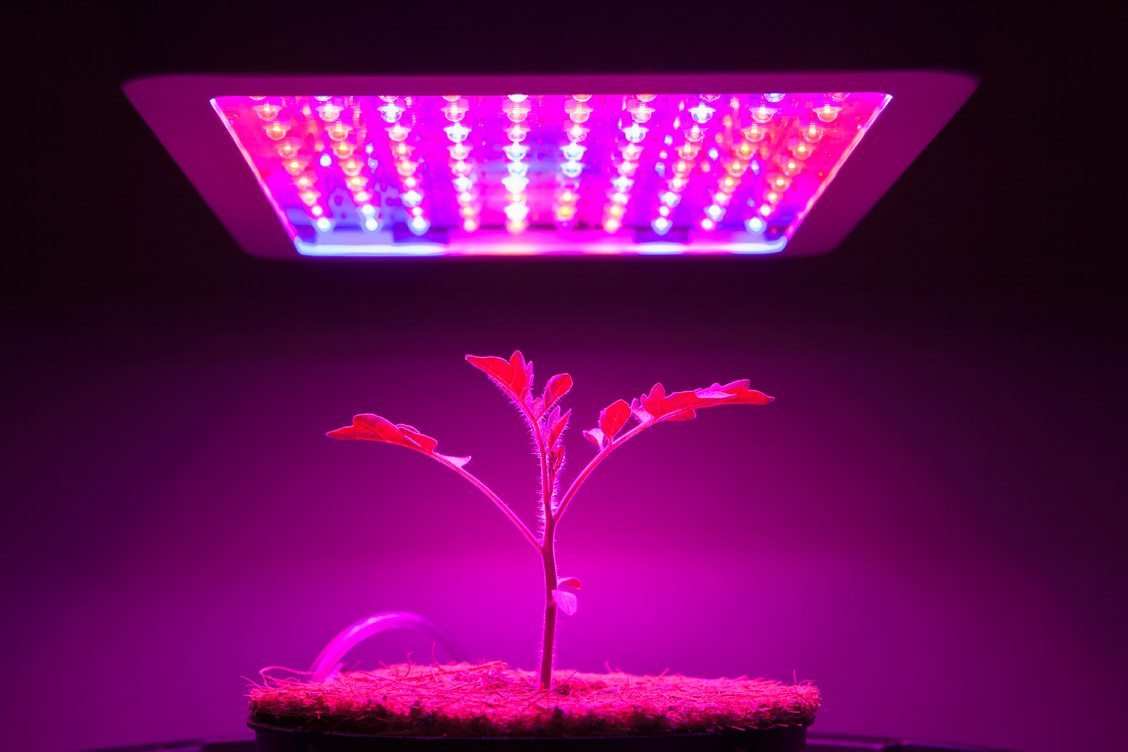
During the germination phase, as well much far-ruby-red can foreclose seeds from properly sprouting, often resulting in their death (Piskurewicz, Urszula, et al.).
In the vegetative cycle, as well causing undesirable stretching, resulting in weak and hands cleaved steams, too much far-scarlet can hurt secondary metabolite production. Plants may lose their normal good for you color due to decreased levels of anthocyanins and chlorophyll, stemming largely from excessive leaf expansion (Alokam South, Chinnappa CC, et al.). Perhaps worse, the levels of antioxidants, flavonoids, and other compounds beneficial to our wellness in the plant can subtract.
None of these should discourage either the commercial or abode gardener abroad from supplementing additional far-red in flower. In fact, our lack of information technology is depriving our crops of what they need, resulting in less than optimal yields.
Far-Red/Deep Red Benefits In Flower
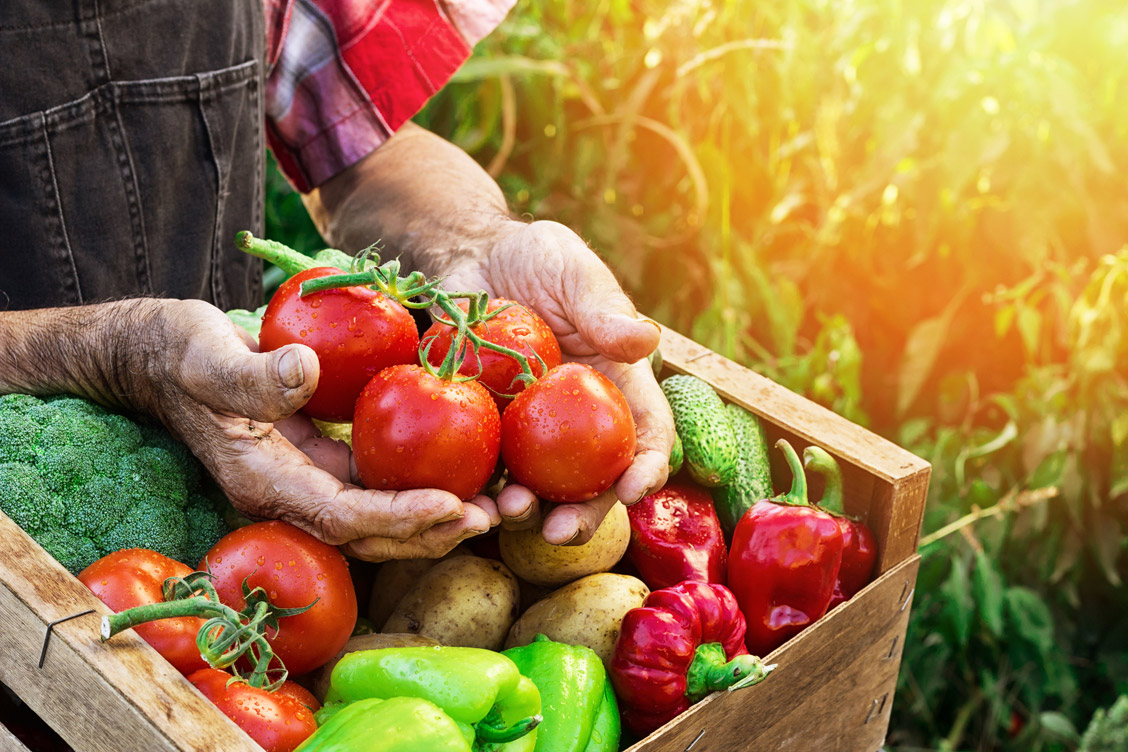
Far-blood-red, often in conjunction with other light spectrums (notably deep red), has shown to significantly increment yield, and it does this potentially in about 5 areas: cell expansion, phytochrome manipulation, photosynthetic rate, higher total leaf area, and assimilate partitioning. It's important to notation that not all volition apply to every found, making far-red/deep red more disquisitional for some plants over others.
Cell Expansion
We know far-red causes prison cell expansion in both the vegetative and flowering cycles. For shade-tolerate plants, this can always be a skilful thing. Case in indicate, lettuce and other leafy greens, which experience bigger leaves with minimum stalk elongation regardless of the growth bicycle.
For shade-intolerant plants that grow upwards, not outwards, to discover lite when shaded, far-reddish photons should be kept mostly abroad during the vegetative stage — deep red is fine, just accept the minimum amount of blue calorie-free advisable for your plants. At present, this can all modify during the flowering stage, where other advantages of far-ruby-red utilize without causing the dreaded stretch. Let'south look at that next.
| Plant | Results | Citation |
| Lettuce and Basil | "Our results show that supplemental far scarlet at a moderate intensity is a viable tool to manipulate extension growth. When added to blood-red and blueish, far-cherry can increase leaf size, and thus, fresh weight, merely at the expense of pigmentation." | Meng, Q and Runkle, E. "Far-cherry is the New Scarlet". Michigan State Academy. |
| Geranium (Pelargonium × hortorum), petunia (Petunia × hybrida), snapdragon (Antirrhinum majus), and impatiens (Impatiens walleriana | "We conclude that FR radiations increases found growth indirectly through foliage expansion and directly through whole-constitute net assimilation and in at least some species, promotes subsequent flowering." | Park, Yu Jin and East. Runkle. "Far-ruby-red radiations promotes the growth of seedlings past increasing leafage expansion and whole-establish internet assimilation." Environmental and Experimental Phytology 136 (2017): 41-49. |
Phytochrome Manipulation
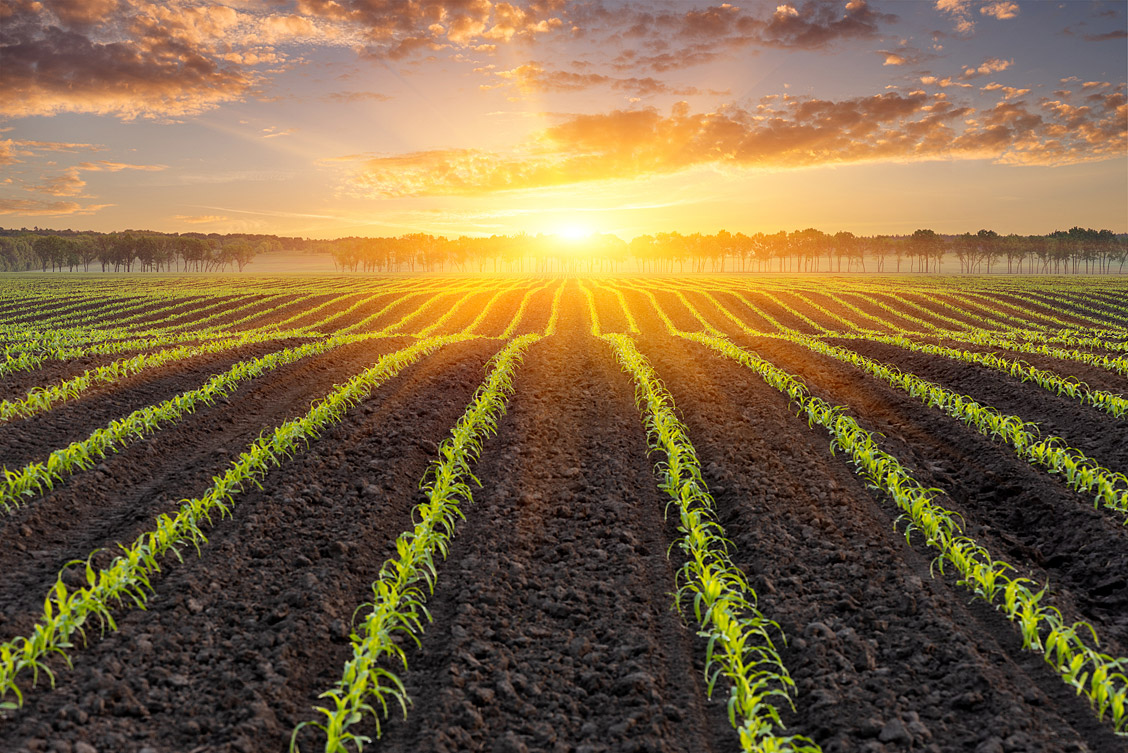
Want to give your crops a shorter flowering bicycle forth with more hours of calorie-free? With far-red/deep red that's possible!
High amounts of far-red and a lack of other spectrums (such as when lights are off) causes a institute's agile Prf phytochromes to return to their inactive Pr state. Deep cherry-red directly does the opposite, driving conversion of inactive phytochromes to get active. This gives plants the ability to tell fourth dimension every bit far-cherry-red photons are more present at dusk, while deep red photons dominate during dawn. Non only do phytochromes let many plants tell fourth dimension, merely it also lets them know when to flower.
In brusk-day plants, when a plant is no longer able to able to convert enough Pfr phytochromes from Pf phytochromes, it starts to flower. In long-day plants, when a institute can covert plenty PFr phytochromes from Pf phytochromes, they flower. This means we tin can employ different ratios of r:fr to change how fast a found enters into the flowering cycle. It should be noted that while the phytochromes proteins play the biggest factor in initiating flowering, availability of nutrients and temperature play a part every bit well.
Crops such as tomatoes and mouse-ear cress have all be shown to transition to flowering faster when given periods of far-red/deep ruddy without suffering a decrease in yield. By shortening the flowering cycle past potentially a week or more, far-cerise is extremely beneficial in perpetual gardens.
For short-day plants, traditionally around 12 hours of darkness is required to flower these plants under sole-source lighting. Even so, short individual bursts of deep carmine, along with far-red, immediately before and later the main lights are turned on/off tin can reduce this requirement, allowing for more hours of light in a 24hr mean solar day.
| Crop | Results | Citation |
| Tomatoes | "FR increased fruit yield, which correlated well with the accelerated flowering and overall increase in plant source forcefulness under FR lite." | Kalaitzoglou P, van Ieperen W, et al. (2019) Effects of Continuous or End-of-Twenty-four hour period Far-Cerise Low-cal on Tomato Institute Growth, Morphology, Light Absorption, and Fruit Production. Front. Constitute Sci. 10:322. |
| Xanthiulm | "Far-red lite given at the first of the night period promotes flowering and shortens the critical dark period by some 2 hours" | Takimoto, A, and K C Hamner. "Consequence of Far-Red Calorie-free and its Interaction with Red Light in the Photoperiodic Response of Pharbitis cypher." Plant physiology vol. twoscore,v (1965): 859-64. |
Rate of Photosynthesis (Emerson Effect)
When comparing plants separated into two abound chambers, with one receiving 300PPFD and the other 350PPFD, we'd expect the plants getting the higher PPFD number to have a greater yield. In near cases, this would be truthful, but what if the 300PPFD gas exchange chamber is given enough far-ruddy photons to make upward for the difference in intensity? Many would wait near equal yields, but research shows this just isn't true.
This phenomenon is called the Emerson outcome, and it describes how plants experience a greater photosynthesis rate when they receive both deep cherry and far-red simultaneously rather than them individually. Substantially, this occurs because both photosystems are on and working together, where simply i would exist triggered if just given either deep red or far-red.
| Plants | Results | Citation |
| Spinach, Basil, Kale, Red Foliage Lettuce, Lettuce, Tomato plant, Bean, Soybean, Apogee Wheat, Tybalt Wheat, Corn, Sunflower | "Adding far‐carmine photons (up to 40%) to a background of shorter wavelength photons caused an increase in canopy photosynthesis equal to calculation 400–700 nm photons. Far‐red alone minimally increased photosynthesis. This indicates that far‐carmine photons are as efficient at driving canopy photosynthesis when acting synergistically with traditionally divers photosynthetic photons." | Zhen South and Bugbee B "Substituting Far-Red for Traditionally Defined Photosynthetic Photons Results in Equal Awning Quantum Yield for CO2 Fixation and Increased Photon Capture During Long-Term Studies: Implications for Re-Defining PAR." Forepart. Found Sci. 11:581156. (2020). |
| "The increase in ΦPSII by far-red light was associated with an increase in net photosynthesis (Pn). The stimulatory result of far-carmine light increased asymptotically with increasing amounts of far-ruddy. Overall, our results show that far-blood-red lite can increase the photosynthetic efficiency of shorter wavelength calorie-free that over-excites PSII." | Zhen, Shuyang, and Marc West van Iersel. "Far-scarlet low-cal is needed for efficient photochemistry and photosynthesis." Periodical of constitute physiology vol. 209 (2017). |
Higher Total Leaf Surface area
Even when nosotros take abroad the three reasons above as to how far-cerise tin can increase yield, there are nevertheless other ways it can do information technology. Now, we're moving into the more unknown and shakier territory.
Since far-red photons are able to penetrate deeper into a establish'south awning, it's thought this could aid keep lower leaves photosynthetically active. Lack of calorie-free is a meaning contributor to bottom leafage death; less total leaf area equates to a worse photosynthetic rate.
| Crop | Results | Citation |
| Tomatoes | "Simulations with a 3D-model for low-cal assimilation revealed that the increase in dry mass was mainly related to an increase in light absorption due to a higher total leafage area when comparing plants grown with and without far-ruby-red." | Kalaitzoglou P, et al. "Effects of Continuous or End-of-Day Far-Red Light on Tomato Plant Growth, Morphology, Light Absorption, and Fruit Production." Forepart. Plant Sci. 10:322. (2019). |
Assimilate Partitioning
Our understanding of the consequence of far-red radiation on digest segmentation is still in its infancy, but there are some fascinating findings that show it can take major implications.
What we do know is that far-red light promotes fruit growth through dry mass partitioning. Simply we have to be conscientious because it does this at the expense of the leaf development. (Ji, Yongran, et al.). Withal, by the looks of the inquiry results, as long every bit this is only happening in the flowering bicycle, in that location shouldn't be much of an event.
1 explanation as to how this happens is that FR light increases fruit sink force in crops like tomatoes. Unfortunately, measuring sink strength in vegetables is not piece of cake to practice, making it difficult to ostend the significance of this effect.
| Found | Results | Citation |
| Tomatoes | "R radiation significantly increased the fraction of dry mass partitioned to fruits and stems at the expense of that partitioned to leaves (Fig. ii). Likewise, FR radiation increased the dry out mass of individual ripe fruits (Table 2). " | Ji, Yongran et al. "Far-red radiation stimulates dry out mass partitioning to fruits by increasing fruit sink strength in tomato." The New phytologist, 10.1111/nph.16805. eleven Jul. (2020). |
Decision
When it comes to supplementing far-red in flowering, there is picayune uncertainty about the wealth of benefits it provides. In fact, the closer we can mimic the varying spectrum of light plants receive throughout the solar day, the better they appear to grow nether sole-source lighting. This means we want additional deep ruby in the flowering cycle as well, so we tin wake our plants upwards faster for a longer photoperiod.
Both the commercial and home gardener will need to weigh the boosted cost of far-red lighting, predominately delivered through individual lighting pucks at the moment. If you abound shade-tolerate plants, run perpetual gardens, desire increase yields, or are looking to give your plants an indoor environment that is as close to the outdoors equally possible, upgrading your lights with far-red should be a priority. If you prefer quality over quantity, right now, there is no need to rush, and you may wish to await into supplementing in boosted blue light before.
All-in-all, the grow lamps of tomorrow will do well by providing the gardener the power to individually control how much far-red/deep ruddy their plants are receiving. This is especially true for the flowering cycle, though, manipulation of plants in the vegetative cycle with far-red can offering advantages also.
Don't forget to check out our article on the importance of blue light during the vegetative growth wheel.
Citations
McCree, Grand. J. (1971-01-01). "The action spectrum, absorptance and breakthrough yield of photosynthesis in ingather plants". Agricultural Meteorology. 9: 191–216. doi:x.1016/0002-1571(71)90022-vii
CR Brodersen and TC Vogelmann (2010) Do changes in light direction bear on absorption profiles in leaves? Funct Found Biol 37: 403–412
Piskurewicz, Urszula et al. "Far-red light inhibits germination through DELLA-dependent stimulation of ABA synthesis and ABI3 activity." The EMBO periodical vol. 28,xv (2009): 2259-71. doi:x.1038/emboj.2009.170
Alokam Southward, Chinnappa CC, and Reid DM. "Cherry-red/far-red low-cal mediated stem elongation and anthocyanin accumulation in Stellaria longipes: differential response of alpine and prairie ecotypes" Tin J Bot eighty: 72-81. (202).
Meng, Q and Runkle, Eastward. "Far-cerise is the New Scarlet." Michigan Country University. https://www.canr.msu.edu/floriculture/uploads/files/far-ruby-red-on-lettuce.pdf
Park, Yu Jin and E. Runkle. "Far-scarlet radiation promotes growth of seedlings past increasing leaf expansion and whole-plant net assimilation." Environmental and Experimental Botany 136 (2017): 41-49. – https://www.sciencedirect.com/science/article/abs/pii/S0098847216302738
Takimoto, A, and K C Hamner. "Effect of Far-Cherry-red Light and its Interaction with Cerise Calorie-free in the Photoperiodic Response of Pharbitis nil." Plant physiology vol. xl,5 (1965): 859-64. doi:10.1104/pp.40.5.859 – https://www.ncbi.nlm.nih.gov/pmc/articles/PMC550395/
Zhen Southward and Bugbee B (2020) Substituting Far-Red for Traditionally Divers Photosynthetic Photons Results in Equal Canopy Quantum Yield for CO2 Fixation and Increased Photon Capture During Long-Term Studies: Implications for Re-Defining PAR. Forepart. Establish Sci. 11:581156. doi: 10.3389/fpls.2020.581156 – https://www.frontiersin.org/articles/10.3389/fpls.2020.581156/total
Zhen, Shuyang, and Marc Westward van Iersel. "Far-scarlet light is needed for efficient photochemistry and photosynthesis." Periodical of plant physiology vol. 209 (2017): 115-122. doi:x.1016/j.jplph.2016.12.004
Kalaitzoglou P, van Ieperen West, Harbinson J, van der Meer M, Martinakos Southward, Weerheim K, Nicole CCS and Marcelis LFM (2019) Effects of Continuous or Terminate-of-Day Far-Crimson Lite on Tomato Plant Growth, Morphology, Low-cal Absorption, and Fruit Production. Front end. Constitute Sci. 10:322. doi: 10.3389/fpls.2019.00322 – https://pubmed.ncbi.nlm.nih.gov/30984211/
Ji, Yongran et al. "Far-red radiation stimulates dry mass partitioning to fruits by increasing fruit sink strength in tomato." The New phytologist, 10.1111/nph.16805. 11 Jul. 2020, doi:ten.1111/nph.16805 – https://pubmed.ncbi.nlm.nih.gov/32654143/
- Latest Articles
- Author Bio

What does it mean to be a mod cannabis grower? I like to think information technology'south someone who loves growing cannabis and applies the all-time growing methods to it to the best of their abilities. But it'south too someone who doesn't shy away from growing other crops, who isn't agape to say growing cannabis isn't special, who actively works to not get caught upwards in all the dogma and myths. That takes a lot of work, just that's why I'm here to help!
Real science and personally applied research. I hope yous join me on my mission to learn how we equally cannabis growers tin grow the all-time pasty-icky around.
See All Articles by The Modern Cannabis Gardener
Source: https://chilledtechgrowlights.com/education/benefits-of-additional-far-red-deep-red-spectrum-in-flower
0 Response to "How To Use Full Red/far Red Flower Booster Lights"
Post a Comment